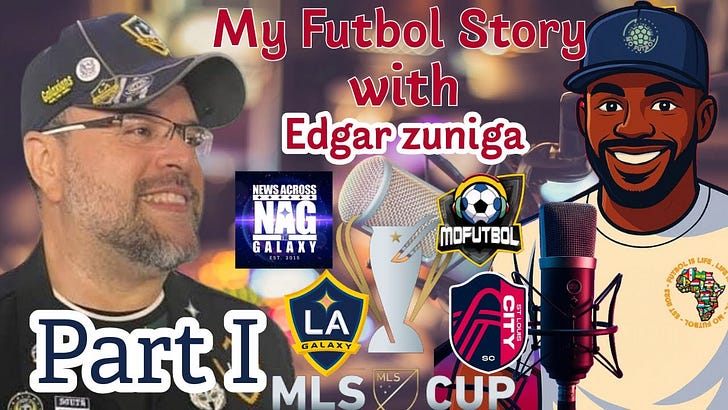
In the world of Major League Soccer, there are fans, there are creators, and then there are the true OGs-the individuals who have been there since the beginning, documenting the growth of the beautiful game in the United States when it was little more than a dream. In a recent episode of Mo Football, we took a trip from the Midwest to the West Coast to sit down with a legend of the craft: Edgar Zuniga from News Across the Galaxy.
Whether you're a die-hard LA Galaxy supporter, a member of the San Jose Earthquakes faithful, or a friendly face from LAFC, Edgar's passion for the sport transcends rivalries. In this deep dive, we explore Edgar's incredible journey from a baseball-centric Nicaragua to becoming one of the foremost historians and voices in the American soccer landscape.
The Unexpected Introduction: From Baseball to Maradona
For many fans in Latin America, soccer is a birthright. However, Edgar's journey was a bit different. Born in Nicaragua, he grew up in a culture where baseball and boxing were the undisputed kings of the sporting world. Soccer was barely on the radar. It wasn't until his family moved to the United States in the early 1980s that the "football bug" finally bit.
Edgar recalls his first exposure during the 1982 World Cup, watching his uncle glued to the television. At the time, he didn't quite get the hype. But four years later, the 1986 World Cup in Mexico changed everything. Watching Diego Maradona lead Argentina against England-witnessing both the infamous "Hand of God" and the "Goal of the Century"-provided the spark. Seeing Maradona weave through a forest of defenders gave Edgar "goosebumps" that he still feels today. From that moment on, he was hooked, not just on the game, but on the global narrative of the sport.
Becoming a Student of the Game
Edgar didn't just want to watch soccer; he wanted to understand it. As the 1994 World Cup approached the United States, he immersed himself in the history of every national team. He became fascinated by the why behind the traditions. Why does Italy wear blue when their flag is green, white, and red? Why is the Netherlands synonymous with orange?
Through his research, he discovered the deep-rooted cultural connections, such as the Dutch "House of Orange" and its influence on their national identity. This academic approach to fandom allowed him to see soccer as more than a sport-it was a tapestry of history, heraldry, and national pride. This thirst for knowledge is what eventually led him to become a prominent voice in the MLS community.
The "Wilderness Years" of US Soccer
Younger fans today see a thriving MLS with packed stadiums and global icons like Lionel Messi. But Edgar remembers a much darker time. Following the collapse of the NASL (North American Soccer League) in the mid-80s, professional soccer in the US entered what Edgar calls the "Wilderness Years."
During this era, soccer was often viewed with skepticism or even outright hostility. It was seen as a "foreign" sport, something alien to the American identity. Despite the fact that soccer had been played professionally in the US for over a hundred years (with the Lamar Hunt US Open Cup dating back to 1914), the general public had largely turned its back on the game.
Edgar likens this period to the long hiatus of the show Doctor Who-a time when the "funding stopped," the mainstream interest vanished, and only the most dedicated fans kept the flame alive through local teams and international broadcasts. For a kid growing up in South Central LA, finding a way to engage with the sport was a challenge, but it was during these lean years that Edgar's loyalty was forged.
Why St. Louis is the "Cradle" of American Soccer
One of the most poignant points Edgar makes during the conversation is the debt of gratitude the entire US soccer community owes to St. Louis. While soccer was struggling to survive nationwide in the 80s, St. Louis remained a bastion for the sport.
Edgar gives massive credit to the city and specifically to Anheuser-Busch. During the darkest period of US soccer history, the company invested heavily in building a training center for the US National Team in St. Louis. They provided the nourishment and infrastructure that kept the national program alive when no one else would.
- Investment: St. Louis provided the financial backing to keep players training.
- Culture: The "Hill" and other local communities maintained a deep-rooted soccer tradition.
- Legacy: This support paved the way for the 1990 World Cup qualification and the eventually successful 1994 World Cup.
While other cities like Portland or Kearny, New Jersey, have strong claims to soccer history, Edgar argues that St. Louis was the cradle that protected the sport when it was at its most vulnerable. For fans of St. Louis CITY SC, this history is a badge of honor that explains why the city's modern-day success was decades in the making.
Key Takeaways for Soccer Fans
- Soccer is History: To truly appreciate the game, look into the "why" behind team colors and crests. It connects you to a global heritage.
- Respect the Roots: The current success of MLS is built on the backs of those who supported the game during the "wilderness years."
- The St. Louis Impact: Never underestimate the role of local investment and tradition in keeping a sport alive during national downturns.
- Community Over Rivalry: As Edgar demonstrates, being an "OG" means respecting all fans, even those of your biggest rivals, because we are all part of the same "brotherhood."
Conclusion: A Legacy Continued
Edgar Zuniga's story is a reminder that soccer in America didn't just happen overnight. It was built by people who bought the books, watched the grainy broadcasts, and believed in the sport when it was unpopular. From the streets of South Central LA to the training grounds of St. Louis, the journey to Major League Soccer as we know it today was long and arduous.
As we look forward to the future of the league and the upcoming international tournaments on US soil, it's essential to look back at the people and places that kept the dream alive. Edgar's passion for News Across the Galaxy is a testament to that enduring spirit.
Want to hear the full story of the "Wilderness Years" and Edgar's take on the future of the Galaxy? Watch the full video on Mo Football to get the complete interview and join the conversation in the comments!